
Our Vision
GRoW
REEFS
We are building a future
where coastal infrastructure
works with nature, not against it.
GRoW REEFS designs and manufactures biomimetic substrates to jumpstart native reefs for coastal protection and ecosystem restoration.
Funded By


Focus Species


The Problem
Long before seawalls and riprap, reefs protected shorelines by reducing wave energy, filtering water, and sequestering carbon, creating living habitats that supported entire ecosystems.
Current reef restoration practices using shell, limestone or recycled concrete fragments invariably fail as the unstable material is covered by silt, or sinks into the mud, preventing reef-building organisms from growing.
— ProPublica, 2023
The Solution
Benefits
WHAT IT DOES
Our science-based products transform ecosystems: protecting shorelines, filtering water, sequestering carbon, creating habitat.

TECHNOLOGY
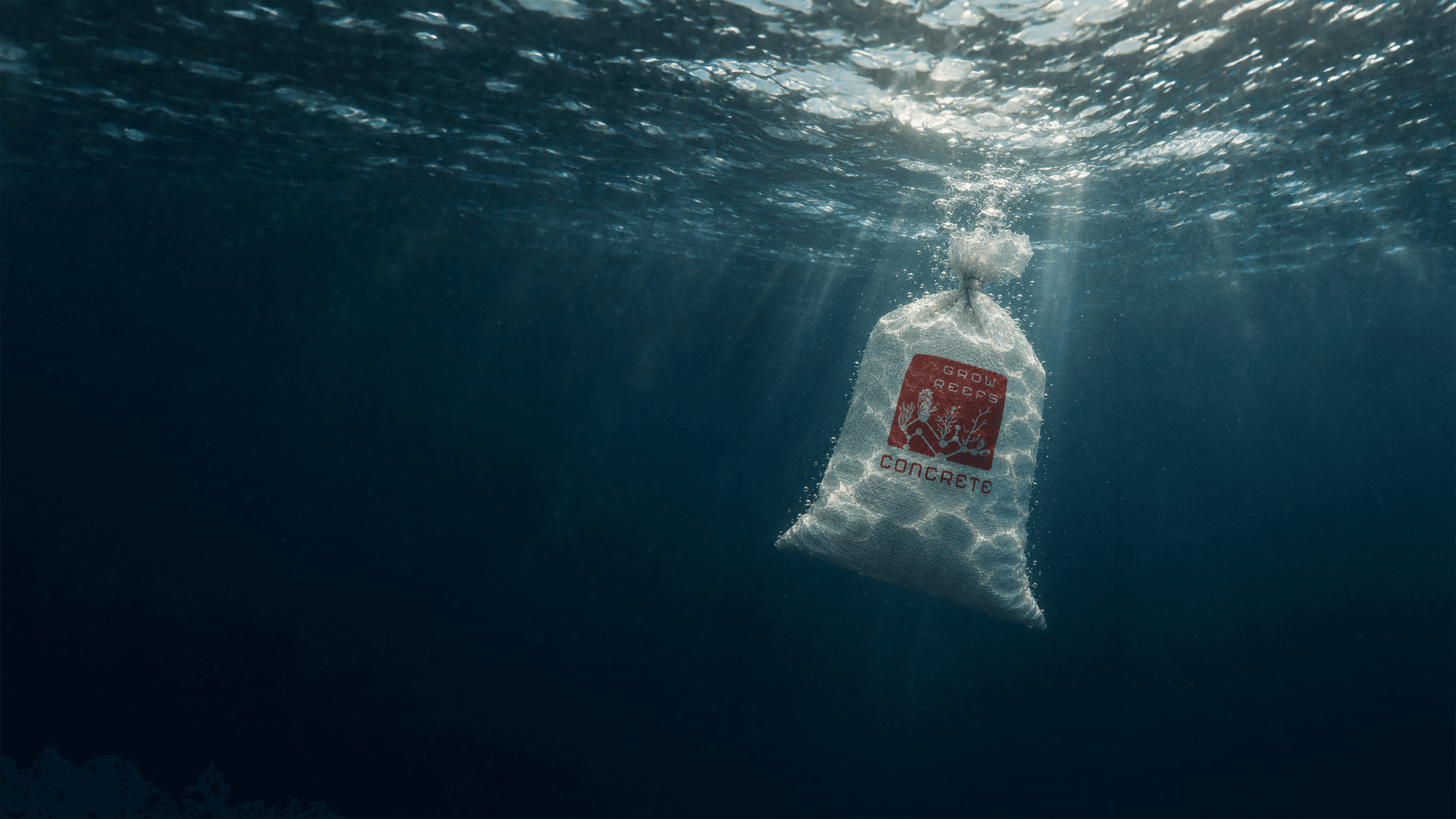
CACO3 CONCRETE™
Clean, marine-grade concrete
+
Formulated to match the oyster shell or coral skeleton
+
Sends chemical cues to attract embryonic reef-building species
+
Provides early-stage nutrition, accelerating reef growth
+
Works for casting or 3D-printing concrete
+
pH of 8.2
No chemical admixtures · Approved by The Nature Conservancy
PRODUCTS
PATENTED PRODUCTS
US Patent No. 11,598,879
made with GRoW_Concrete™
+
typical size: 12" x 12" x 8"(h) / 30 cm x 30 cm x 20 cm
+
modular substrate for intertidal + subtidal reefs
+
supports recruitment + survival of oysters, mussels + other calcitic reef-builders
+
serves as a surrogate until oysters are well established
+
helps oysters bridge between substrate units
+
promotes species health
+
clusters to create extensive reefscapes
+
integrates seagrass planting for shoreline retention + carbon capture
+
typical Size: 5" (h) x 4" (d) with a 1" diameter hole.
+
3 surface variations
+
seed with embryonic oysters; insert into rock/riprap crevices to establish living reef
+
ideal for spat collection, oyster gardening + research
+
connects to ropes for docks, piers + buoys
+
attracts oysters, corals, mussels + other species
+
reusable
Select Press


TEAM
CEO
Founder
Inventor
Evelyn tickle, faar
Evelyn Tickle is an internationally recognized expert and leader in coastal resilience and aquatic ecosystem restoration. She brings more than twenty years of experience and expertise in biomimetic design and concrete fabrication to the challenge of large-scale shoreline protection.
She is the inventor of GRoW's patented calcium carbonate–rich biophilic concrete formula and catalogue of reef-building products, deployed in the Gulf of Mexico, the Chesapeake Bay, along the California Coast, the U.S. Eastern Seaboard, and the south coast of the UK.
Evelyn holds a Master of Architecture from the Southern California Institute of Architecture and a Rome Prize in Architecture.
She is a Fellow of the American Academy in Rome, an MIT Solver, Biomimicry Institute Ray of Hope Prize Awardee, and was named USGBC-California's Net-Zero Trailblazer in 2024.